Name Writing Practice: Start with a Meaningful Activity
Show the child's name, invite a mark or a letter, and use it on something they made. Choose an activity that fits what they want to try today. A whole page of tracing is optional.
Use the activity-card maker below for a concrete starting point, or make a name tracing worksheet when a child wants a printed model.
Make today's activity card
A name-card hunt
You need: paper, a marker and a place to display the name.
Write the child's name on matching cards. Put one beside their drawing and invite them to find its partner.
If they prefer pictures, add the same small drawing to each card. Read the name together.
Finish by letting the child choose where their name card belongs.
The choices describe an activity, not a developmental score. The card is made in your browser; nothing is submitted.
Compare two name-practice plans
The comparison keeps the number of name attempts fixed while moving selected attempts from tracing to blank writing space.
Worked example: Emma
For this planner, Emma has four letter positions, so three full-name attempts contain twelve planned letter positions.
Changing one of those attempts to blank space leaves eight tracing positions and four blank positions, without adding another attempt.
A letter position is a planned place for one letter, not a stroke count or a record of completed writing. Blank positions are counted as space for a full-name attempt. These calculations do not measure effort, readiness or learning. Choose the activity with your child; the numbers are not a target.
Notice the name before asking for a copy
Recognition and handwriting are different jobs. Pointing to a printed name does not require a child to reproduce its letters. For a name hunt, make matching cards and look for a partner together. Read the name aloud rather than turning the activity into a quiz.
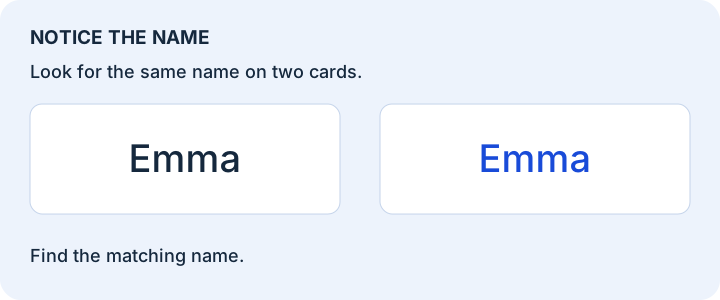
Invite a mark, a first letter or a whole name
Let the invitation match the task the child wants to attempt. Offer blank paper beside a name model. A child might draw, add letter-like marks, copy the first letter or try the whole name. You can write alongside them and talk about what you are doing without correcting every mark.
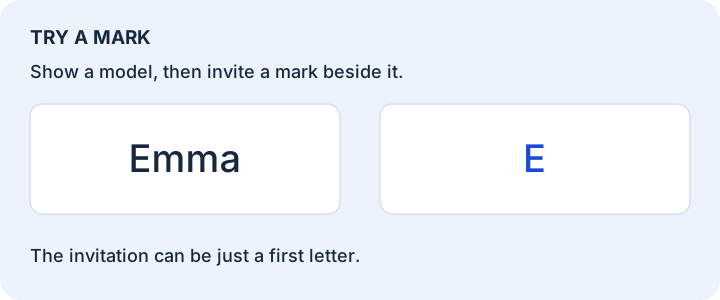
Use the worksheet settings for a specific task
For a printed model, open our name tracing worksheet generator and type the name as you want it shown. Pick School print or Tall print. These are print styles; this version does not make cursive handwriting.
For a tracing invitation, choose Dotted, Dashed or Light solid. Letter height changes the model size, while Dot spacing changes the gaps when the dotted style is selected. Show handwriting guide lines if you want a visible writing area. Try the preview before asking a child to use the sheet.
Tracing rows controls how many models appear. Start with the amount you intend to use rather than treating every available row as homework. Choose US Letter or A4 to match your paper. In the print dialog, inspect the preview and scaling; use Save as PDF there if you want a PDF copy.
Give the name a job
After an invitation to write, offer a use for the result: add it to a drawing, sign a pretend note or label a homemade book. Let the child decide what their marks say and where the paper belongs. The activity card keeps that purpose visible instead of counting completed rows.
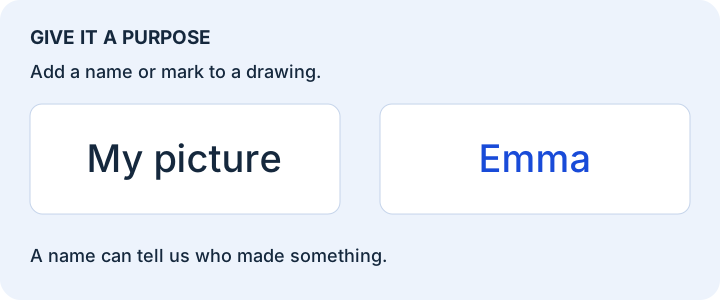
Should three-year-olds be writing their names?
Offer name writing as an invitation, not a pass-or-fail requirement based only on age. Early writing can include drawings, letter-like marks and attempts at letters. A child who wants to make a mark can join in without producing a neat whole name. Follow their interest, and discuss the kind of support that suits them with their educator.
The underlying teaching approach is to model writing, make it useful and accommodate different fine-motor abilities. Read more about early writing.
What if my child does not want a worksheet?
Choose the drawing or name-hunt card instead. Offer the materials without requiring a finished sheet. Keep the model available for a later activity. The card maker has no timer, score or requirement to advance to another choice.
Keep a useful note for next time
On your own paper, record the invitation you offered, what the child chose and what you might offer next. For example: “Offered a name model; chose to draw and add an E; next time, put the model beside a picture.” Describe what happened rather than comparing it to another child's work. This site does not store an activity history.